
Nutrients 103
Organic Fertilizers
While inorganic fertilizers feed the plant, organic fertilizers, like compost, feed the soil
You Feed Soil Life: Natural materials strengthen the soil food web, supporting earthworms, beneficial bacteria, and fungi that help roots thrive.

It's Slow Release: Soil bacteria and fungi break down compost and manure gradually, providing a slow, steady supply of nutrients to plants.
Improves Soil Structure: Organic matter adds texture, making heavy clay soils lighter, and improving water retention in sandy soils
Low Risk of Plant Burn: Unlike chemical alternatives, organic options are gentle and far less likely to overfeed or damage plant roots and leaves.
Comes Straight from your Kitchen: Composting kitchen waste, newspapers, grass clippings and other organics is free of charge and home baked.
Green is the Fuel & Brown is the Furnace
To build a healthy compost pile, you need a balanced mix of green materials and brown materials.
Green Fuel Materials and Nutrients:
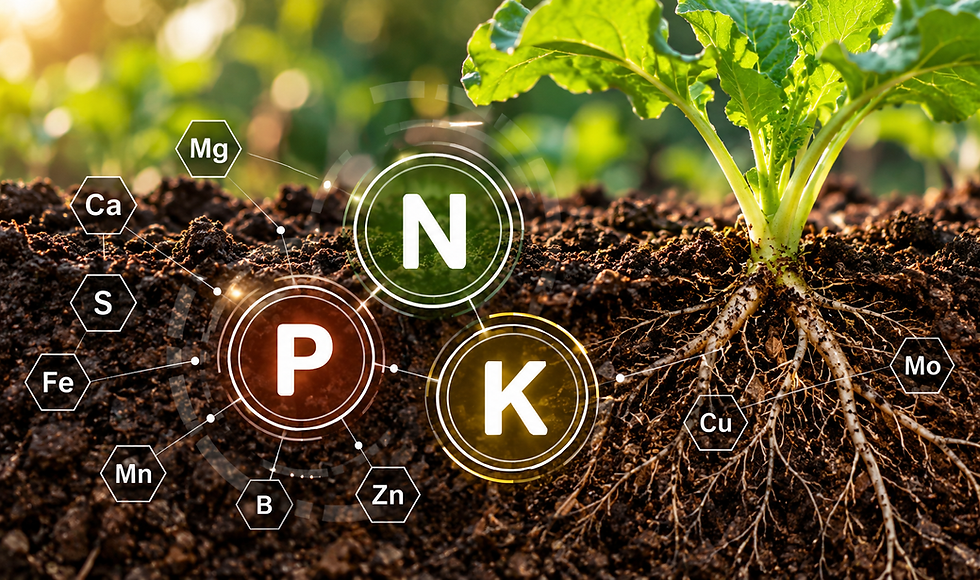
Nitrogen (N): Highest in "green" kitchen waste like fruit peels, vegetable scraps, coffee grounds, and tea leaves.
Phosphorus (P): Found in smaller amounts in vegetable scraps and concentrated in items like fish bones eggshells.
Potassium (K): Highly abundant in kitchen scraps like banana peels, potato skins, and fruit waste.
Calcium (Ca): Extremely high if you include crushed eggshells; builds strong cell walls, supports root and leaf growth, and helps plants send internal stress signals
Magnesium (Mg): Found in green leafy vegetable scraps; crucial for photosynthesis.
Brown Furnace Materials:
Shredded cardboard and paper bags: Tear or cut them into small pieces.
Dry autumn leaves: Great for bulking up the pile and adding carbon.
Straw or hay: Helps create air pockets in the heap.
Sawdust and wood chips: Use only from untreated wood and in small amounts.
Other household items: Dryer lint, natural cotton string
Putting It Together
When composting, aim for about three parts brown to one part green. Every time you add a bucket of kitchen scraps, toss in three buckets of leaves, shredded newspapers, or cardboard. Keep the pile as damp as a wrung-out sponge, turn it every week or two, and let the microbes do the work.
If it smells, add more brown.
If nothing is happening, add more green and a bit of water.
Compost won't replace every bag of fertilizer, but it builds the soil that makes everything else work, and it costs you nothing but kitchen scraps and a little patience. Feed the soil, and the soil will feed the plant.
Pile smells like a swamp, or hasn't shrunk since spring? Drop me a line, and we'll figure it out.


Well done and very informative